 Back
Back
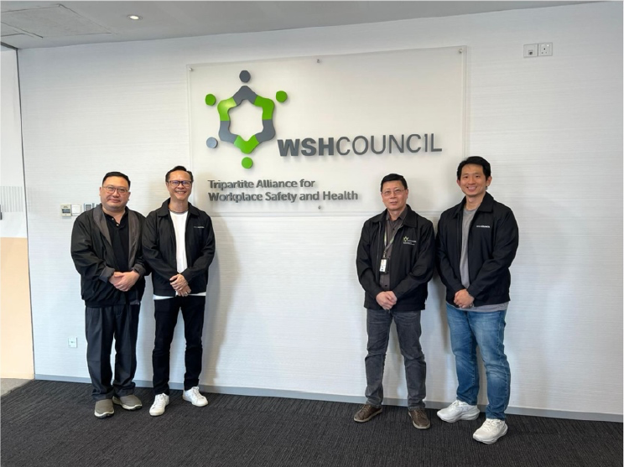
For chief executives and board directors, meaningful learning connects workplace safety and health (WSH) with the decisions they make and the responsibilities they carry. It draws on their experiences while creating space for reflection, peer exchange and fresh perspectives on leading safer workplaces.
This ambition guided the Workplace Safety and Health (WSH) Council, part of the Tripartite Alliance Limited (TAL), in enhancing its Top Executive WSH Programme (TEWP). Designed for senior leaders in higher-risk industries, the refreshed programme makes WSH learning more relevant to the realities of leadership.
Raymond Wong, Senior Assistant Director (Competency, Practices & Training), WSH Council explained:
“Through this collaboration, we sought to transform TEWP - igniting greater passion and commitment to workplace safety and health across the workforce, and contributing to a meaningful workforce transformation.”
To realise this ambition, TAL partnered with the Institute for Adult Learning (IAL) on a Learning Enterprise Alliance (LEA) project. The collaboration tapped IAL's expertise in adult learning to enhance TEWP and build the capabilities of the WSH Council’s training team.
Designed with the Learner in Mind
IAL and the WSH Council’s training team first examined how executives experienced TEWP across in-person, live online and self-paced formats. They gathered inputs from facilitators and programme owners, and benchmarked the programme against executive education design principles. This helped them identify ways to engage different learner profiles and better connect learning with workplace practice.
These insights informed a jointly developed Train-the-Trainer programme, and a set of design templates grounded in the ADDIE framework, persona-based design and adult learning principles. The training team applied these concepts directly to the redesign of TEWP, turning theory into practical design decisions.
The approach served two goals: making TEWP more relevant and engaging for senior leaders, while equipping the team to design future learning programmes independently.
Turning WSH into a Leadership Conversation
As TEWP evolved, its learning experience was restructured around the realities of executive decision-making.
The programme integrated four areas: ethics; governance and legal considerations; the Approved Code of Practice on Chief Executives’ and Board of Directors’ WSH Duties; and policy and audit. Real-world cases and leadership perspectives connected these areas with the responsibilities and decisions senior leaders face in their organisations.
The redesigned learning journey followed five stages:
Insight → Dialogue → Reflection → Action → Accountability
Participants moved beyond passively receiving information. They engaged with ideas, considered different perspectives, reflected on their leadership responsibilities and connected the learning to organisational action.
The WSH Council’s training team also learnt to design each delivery mode with intent. While in-person, live online and self-paced formats offered distinct learning experiences, all were aligned to the same outcomes.
Lee Chee Wee, Assistant Director (Competency, Practices & Training), WSH Council, said the process strengthened the team's approach to adult learning:
“The collaboration with IAL and the consultant, Cherie Tseng, was highly valuable and purposeful. Their experience in adult learning strengthened our approach and sharpened the focus on engaging senior leaders.”
From One Programme to Organisational Capability
The project strengthened both TEWP and the team's ability to apply its learning.
Following the project, 85% of the WSH Council’s training team demonstrated that they could apply instructional design and adult learning principles to programme design. At the organisational level, 80% of internal reviewers agreed that the redesigned TEWP had established a clearer and more consistent standard for executive-level programme design.
Beyond these immediate outcomes, the project created a scalable design framework that the team can draw on when developing future leadership-centric WSH programmes.
Lee reflected on the impact on TEWP:
“The enhanced TEWP is more focused, relevant, and impactful, with clearer executive-level messaging and stronger engagement. The project achieved its objectives and materially improved the programme’s effectiveness.”
The team now has practical approaches, templates and experience to guide the design of future learning for different audiences and modes of delivery.
Taking the Learning Further
For TAL, the next step is to build on this foundation and embed the learning more widely across the organisation.
Donovan Loh, Senior Manager (Competency, Practices & Training), WSH Council, shared:
“Our next step is to scale and embed these practices, applying the design framework across more programmes and strengthening a consistent, leadership-driven approach to learning design throughout the organisation.”
Potential next steps include developing sector-specific executive learning pathways, strengthening digital and blended delivery, and exploring how learning influences organisational practice and leadership behaviour over time.
The collaboration shows how learning grounded in organisational needs can build lasting capability. Through LEA, IAL helps enterprises strengthen their teams and translate learning into better workplace practices.
Discover how IAL can support your organisation in strengthening workplace learning capabilities and turning learning into meaningful workforce and business outcomes.